Cover Vs. Copy

We’re not often encouraged to judge a book by it’s cover, but when my professor assigned us to redesign the cover of a book we have read, Sugar Nation came to mind right away.

1. The Medium is the Message- By looking at this book, I expected to learn about all the places where sugar is hidden in

Before
Before

the American diet and how to improve our nutrition. I was also hoping to learn all the reasons sugar is detrimental to our diets, in hopes that I would have more motivation to tame my sweet tooth.While some people wouldn’t consciously think a book cover, they may just like one more than another, how much I hated the cover of this book crossed my mind every time I picked it up. Here’s why:

The author had other intentions, which was to tell more of a memoir of how Diabetes has impacted his life. I blame this miscommunication on the cover of the book, which may seem harsh, but that’s the purpose of a book’s cover and graphic design in general, is to communicate with the viewer.

2. What Meets the Eye- I also thought that the colors and fonts chosen for the cover do not match up with the overall tone of the novel. Neon blue and white is far more uplifting and dynamic than the copy beneath the cover. The main focus of the book, as I mentioned, is his own and his father’s journey with diabetes, along with commentary on how diabetes is being treated. I’m not sure about you but I wouldn’t have come to that conclusion.

3. Start at Square One- The images associated with the title take a very literal approach to the title’s message. Once again, while this communicates a connection between our nation and sugar, the title and the imagery used do not match the narrative. The caption below also doesn’t match up with the image, because nothing about a flag in a sugar bowl is hidden or related to medicine. Basically, the recommendation here is to change everything, including the title of the book.

After
After

Rather than using the imagery of only sugar and the flag, I thought it would be more effective to communicate the role sugar has played in US History, with using entertainment events like pie-eating contests as an example. This also conveys that this connection between our country and sugar is not a new phenomenon, which is important when attempting to create change. The roots run deep.Moving forward, I started to understand why the diabetes piece may have not been included in the cover. It’s hard. Utilizing medical or diabetes imagery  can be difficult to convey in a visually-appealing way. After playing around with it, I decided to take a less modern approach to the design, to at least give it more of a memoir feel.

I’m not sure this completely solves the miscommunication between the book’s topic and cover, but removing the caption hopefully opens it up for more interpretation. If the assignment called for creating our own images over finding images, I may have been able to communicate the message further; but I still believe the title starts this novel off a different path than  where the reader is taken.

I believe this shows the importance of communication between parties, the designer should never just be fulfilling orders, but rather offering creative perspective to find a way for the most effective link between the written and visual communication.

What do you think could help either of these covers?
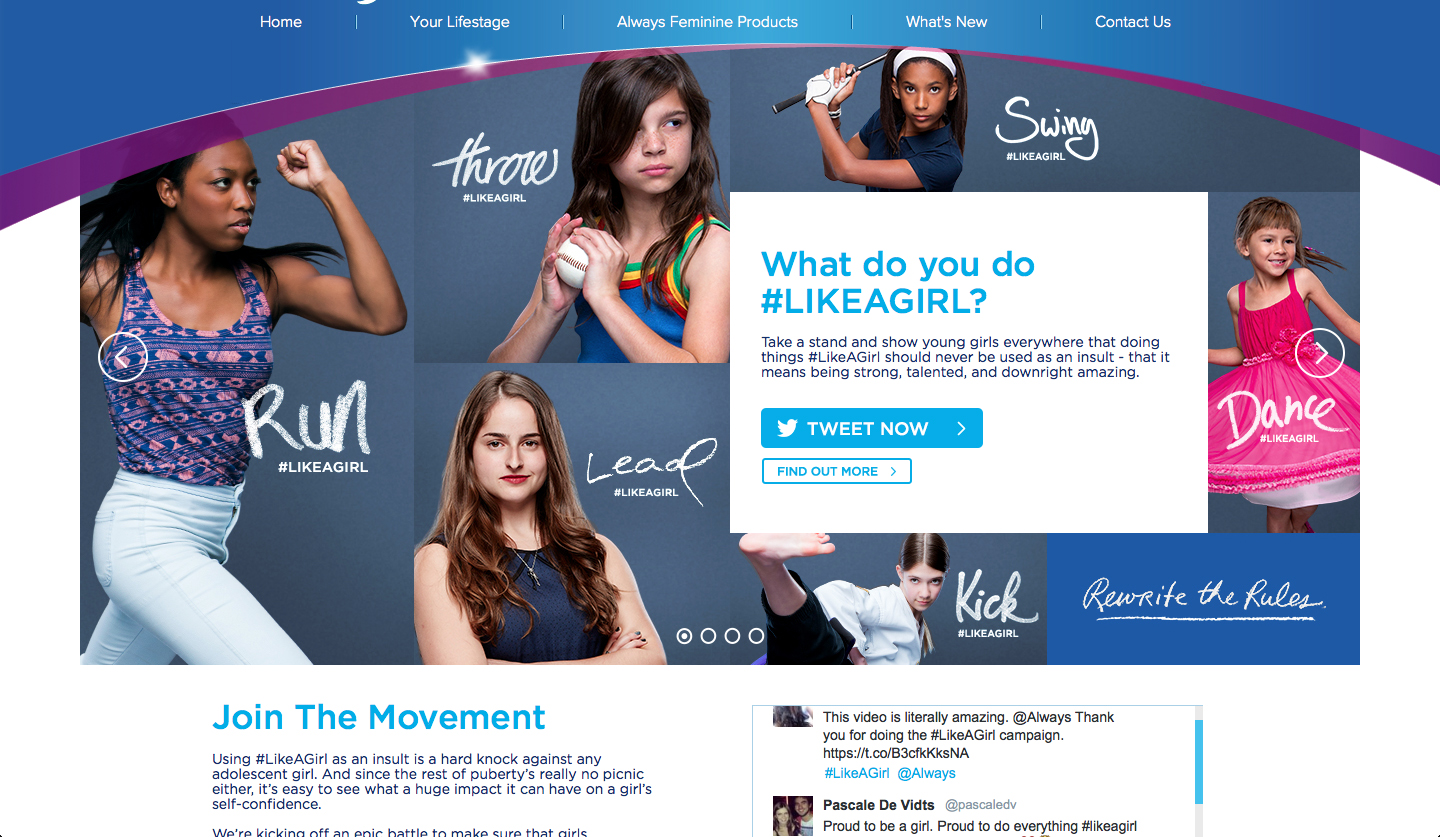
Campaign of the Week: #LikeAGirl

International Women’s Day brings to mind many bold and courageous females, continuous struggles for equality, and apparently, advertisements.

Always has caught my attention once again, with their recent release of another video, Stronger Together, for their #LikeaGirl campaign.

This campaign took social media by storm when it was released in the summer and again when shown in the 2015 Superbowl. To keep the buzz alive, Always celebrated International Women’s Day with a #LikeaGirl campaign video that showcases girls and young women, worldwide, displaying what it means to be a Like a Girl.

Originally, the ad related to athleticism, as that is an area where girls and women tend to be belittled or thought of as inferior. However, in this new video they address the many areas of life girls and women excel at, but are often not regarded as leaders in the field. This includes “calculate #LikeaGirl,” as a female student completes a math problem and “experiment #LikeaGirl,” as another student does chemistry.

While some have thought of this campaign as random, or worse, that it is capitalizing on feminism for corporate gain. To be fair, the company has boosted sales as a result to the Superbowl air time. Call me an optimist, but I think the new Stronger Together video solidifies Always’ intentions. As a company focused on the female market and needs, taking a stance on the empowerment of women doesn’t seem like a far stretch to me. Here’s why:

1. Rewrite the narrative: The tagline is powerful because it converts a phrase that is often intended as an insult, and shows why there is nothing about being a girl that someone should be ashamed of. Likewise, it is not uncommon to hear “time of month jokes” in conversation or in the media, so much so that they can be used to justify why women shouldn’t be trusted to lead a household, a company, or the nation.

2. Perspectives have impact: Sadly, I think everyone has heard the criticisms of female politicians being “too emotional” to handle foreign affairs, or the tongue in cheek jokes about wars that could start when said politician was menstruating. The #LikeaGirl tagline allows Always to cover all of these areas where girls and women need empowerment.

3. The new video also solidifies pre-teens as their target market, which is reaching girls at a time in their life when the Always brand has a new sense of relevance. As girls are entering puberty, Always wants their message to be clear, you have nothing to be ashamed of. Not to mention, this target market is also creating brand loyalty for potential lifelong users.

When it comes to the popularity of the ad, I think a great deal of credit goes to the strength of the tagline. It’s short and sharable—hence the Facebook impressions—it’s memorable, which helps sales; and it’s inspiring, which creates an emotional connection with the brand.

But more than anything, I think women of all ages resonate with this ad and just wish it came out sooner, so they could be the young girls empowered to inspire others.

always_like_a_girl_site

Design Daze

Screen Shot 2015-03-05 at 10.48.36 PM“I don’t know I just hate all of it,” I told my Media Design professor, walking back to my monitor to show her my Cipe Pineles project, “don’t get your hopes up.”

As I scrolled through InDesign for my professor, she claimed it wasn’t as helpless as it seemed. I suggested about five different and better directions I could take it in, but she reminded me that the project due date was nearing and I wasn’t exactly ahead of schedule. Unfortunately true.

It’s often said we’re our toughest critic; but when the other option is your grade or job performance reflecting that missed detail, how could we not be? The issue with this self-criticism isn’t that it exists or is too prominent, but rather that it isn’t balanced by self-advocacy.

This summer at my internship, I redesigned a mundane product document to make it more engaging, effective, and brand conscious. However, due to a tight deadline and miscommunications, it wasn’t perfect and couldn’t be used for the approaching event. Although disappointed, I didn’t have the same urge to delete it all and start from square one that I experienced the other day.

Instead, I saved it in one of my folders, for no other concrete reason than the fact that I liked it.

Certain this design would have a time to shine, I mentioned revising it a few times for the events between July and November but it never seemed to be priority. Eventually with the right audience and timing, I got the green light to make a few changes and bring the document back on the table. This turned into many changes, every draft better than the former.

That’s my favorite pScreen Shot 2015-03-05 at 10.45.10 PMart of designing, creating and writing for someone other than myself, their critiques will catch things I don’t see or to be honest, that I wouldn’t be motivated to perfect if it didn’t affect anyone else.

So what if we have it wrong? Are we meant to be our toughest critics, perfecting things before they see the light of day, even if that sometimes means they’ll never leave a buried folder?

While there’s obvious value in this, I think we need to put more of our energy into following ourselves down the rabbit hole, then perfecting that vision until everyone can see it. This means spending less time brainstorming for that flawless consensus moment; it won’t exist if someone doesn’t dive fully into their creativity and advocate for themselves.

Staring at my Cipe project, I thought of this scenario, and decided to move my project in a direction I could be excited about. Despite the tight deadline, a project I want to work on will be completed to higher quality and well before a project I am dreading. At the end of the day, your coworkers, professors and audience are there for critiques; but if you don’t advocate for yourself, your creativity, who will?

Ad of The Week: Partners in Parenthood

As students, we’re often told not to narrow ourselves into one area of strategic communications, as the fine lines that separate advertising, public relations, marketing, etc. continue to stretch and shift.

Originally, I never saw myself filling any role in advertising or marketing. Strategic communications as a whole, really, felt like intimidating, uncharted territory that I could just skim the surface of with my love for events and writing. However, through diverse opportunities and challenging myself to diversify what opportunities I think I can approach, this thinking has shifted.

I think these fine lines that separate focuses have more to do with the people than the work. Public relations always appealed to me for the opportunity to create relationships on behalf of an organization and impact how people think of their brand. That appeal still exists, but I now recognize that my skills for this can be- and need to be- applied to all mediums of strategic communications.

The advertisements and campaigns I get most excited about do just that, which is why I am highlighting Petsmart’s Partners in Parenthood campaign (by GSD&M). The advertisements, two of which were shown during the Oscars, play on the idea of pets being part of the family, and create satiric scenes of the different stages of “parenthood.”

The extended version of all the advertisements can be found on YouTube, and can credit a good fraction of their views to my free time and love for dogs.The campaign’s unifying idea is that PetSmart will be with you every step of this journey, something every actor calls out in some way in the commercials and online videos. PetSmart brings attention to the humorous and all too true dynamics of a pet owner, which looks much more like a parent and child. It also creates or reinforces a need by telling pet owners “No, you aren’t caring too much about your pet, don’t second guess these toys, boots or grooming sessions.” At the same time, the products are weaved into the stories so well, you don’t feel like they’re being aggressive.

The marketing directors of PetSmart said their goal was to “make people laugh or smile as they recognize themselves or someone they know in the videos; and to remember PetSmart, I think it will set us apart.” They predict it will be a successful campaign, which I completely agree with.

Within minutes of finding the ads on YouTube, I posted the full video (2 minutes vs. 30 second t.v. spot) to my friend’s

Facebook, tweeted about the campaign and quickly emailed the links to my family. When you can see your self or others in an ad, it builds a connection with that brand, a sense of they get me.

Additionally, PetSmart had traditionally took a more “features” approach to advertising, which didn’t really set them apart or make them too memorable. This campaign focuses more on their customers and what PetSmart has in common with them, a love for pets. The creative target audience seems to be “obsessive pet owners,” or “helicopter pet parents,” who can be reached in a completely different way than the people who are looking just for the essentials for their pet.

PetSmart is making fun of how ridiculous owners like Anna Farris (and me) sound when describing the haircut their imagining for their dog’s grooming, but at the same time they are saying, we get it, they aren’t just a dog, they’re family.

If that’s not focusing on creating a relationship, I’m not sure what is.

Brand Personality Done Right

SW2Security lines that are a bit too long and bags of pretzels that are a bit too small always come to mind when I think of air travel. However, my weekend trip to Columbus via Southwest brought my attention to the importance of brand personality when fighting competitors for ticket sales.

Southwest understands this, and makes sure that their brand personality is present in every aspect of what they do.

I noticed this right away when getting on my first flight, the attendants and pilots made many jokes over the loud speaker and spoke in a very casual way. This included directions like, “please pretend you’re paying attention as we demonstrate safety features.”

The napkins that came with our drinks also had fun taglines like “Here’s to You” and the stirring stick in my coffee was shaped like a heart at the top, true to their brand imagery. When it was time for us to get off the plane, the pilot chimed in, “We are on time, so be sure to tell all of your family and friends, because we know you tell them when we’re late. Okay now get out of here and have a great day!”

Out of context, these details and interactions make the airline sound unprofessional. However, since they incorporated this as part of their brand personality, it can be expected of the company regardless of where you are flying from or what crew you are with.SW1

This is reinforced by their advertisements. One of which I saw in the skyway when boarding had a picture of a staffer, and it said, “Everyone has attitudes, our employees just have the right kind.” Another ad states, “We’d like to match their new fares, but we’d have to raise ours.” This recognizes the airline competition and allows consumers to associate Southwest with low prices and their distinct brand personality.

The most important piece when it comes to brand personality is remaining consistent. If it weren’t for the advertisements, napkins, and pilot’s dialogue, I may have thought I just had rude attendants. However, because their personality is so well represented and widespread, consumers understand their intention. It sets them apart as an organization who has employees that love their job, are loyal to the company, and enjoy serving their passengers.

This approach to brand personality is also in line with their relaxed practices, as you choose your own seat and boarding is grouped into A-B-C rather than dictated by seat number. However, having a strong brand personality can also backfire if a passenger doesn’t fully engage with the brand. For example, had I not taken Southwest both ways on my flight, had I not read the brand messages on their products, or seen the advertisements, I may have not understood that this was intentional.

Luckily for Southwest, brand personality is my favorite aspect of strategic communications, so I will remember them more fondly as a result of their effective brand representation.

Just Keep Leaning

Sitting in an meeting I was observing for work, I looked around at the pondering faces of leadership consultants, all two-three times my age. Their questions began overlapping with others’ reflections, and any chance for clarity seemed to be drifting father away.

After thinking of a related explanation involving advertising agencies, I debated whether I should jump in, considering I wasn’t invited as a participant. By the time I convinced myself I was qualified enough to be sitting at the table and needed to lean in, the conversation had escalated and despite my attempts to interject, I couldn’t get a word in edgewise.

Rather than accepting defeat or regretting trying, I waited for a time of transition and told the man who had started the conversation my perspective from the creative/strategic communications world. Nodding thoughtfully, he thanked me for offering the insight. lean in

Regardless of details, it’s the fear of being wrong that glues your arms to your sides or your lips to a crease. The interaction with the one consultant and positive self-talk I used to motivate me to be involved was inspired by the Sheryl Sandberg novel, Lean In.

One of my favorite things about this book, which has been on the tip of many tongues for two and half years, is seeing how it resonates with others. For me, it played a significant role in the development of my professional life, as I stopped envying others’ experience and started pursuing and creating opportunities for myself.

On the other hand, some say it excluded different socio-economic classes that may not have the job stability to demand more responsibility or equal treatment. They also say there is no advice for breaking down initial barriers when entering the workforce.

A dear friend that always challenges me to see the world through a different lens, pointed out, “By telling women to ‘lean in’ she is putting the blame on women for the patriarchal society we live in and that they need to do all the work to break the glass ceiling…[women] are not the problem.”

While I understand and mainly agree with these criticisms, I believe it’s this demand to get it exactly right, to be an expert, that keeps our hands down and lips closed.

Advice for navigating the corporate world did not and will not resonate and inspire every reader as much as it did for me, but that doesn’t mean Sandberg fell short. Not everyone’s goals or lifestyles involve pencil skirts or equal pay, and because of this, I don’t think her target was every individual of every lifestyle. We’re asking a lot of Sandberg to cover so much ground, rather than diving deep into what she knows from experience, which happens to mainly take place in the corporate world.

If we wait to have the knowledge of every single piece of the puzzle before taking action, it results in a lack of confidence in your ability to create change, to take risks, and to create your own future.

IMG_0886Furthermore, even if we did wait for all the data and qualitative research, it’s human experience that trumps all. It’s when others express their perspective, their truth, that we make these lasting connections; not when they regurgitate what they learned from a book. For me, writing and publically posting my blog is my way to continue combating the voices that tell you to be smaller and fly under the radar, where there’s no risk of being wrong.

Whoever you credit to the shift, and there are many to thank, there has been a passion sparked that has removed negative connotations of the f word. It’s allowed more men and women to have conversations about feminism unapologetically; case in point, the recent Golden Globes.

Recognizing that nothing and no one will ever perfectly hit the mark, it’s our responsibility to highlight strengths to inspire others to build upon them, and illuminate shortcomings to empower other individuals to fill the gap. In my opinion, that’s leaning in, too.

3 Reasons to Redraft your Resolutions

new yearAlthough Monday is the Nickleback of the weekdays, the approaching first Monday of the new year is an exception. It’s the calm after the storm. Whether it’s the first day back in the office or the first truly relaxing day of winter vacation, there is a sense of routine and normalcy. As much as I love the holidays, I am looking forward to going back to the Cities and having days filled with activities and responsibilities that are more overarching than “exchange pants at Lululemon.”

Now that the shopping day countdowns, calories and chaos are behind us, it’s natural to wonder what the coming months have in store.

Spoiler alert: not much.

Unless you decide to create it, that is. Throughout the month of January, the words new year’s resolutions have about as much appeal as after-graduationwe-need-to-talk and moist. Goal setting is common for new school years, birthdays and professional opportunities, yet the cliché name we attach to our aspirations for the new year tends to make them irrelevant by Valentine’s Day. Here’s why-

1. Failure is an option– Although it can be helpful to make resolutions concrete, it’s this same tendency that makes it easier for us to say, “I tried, I failed, I quit.” If your goal is to go to the gym three times a week, and you only make it once or twice, this progress gets lost in the number. By focusing on your intention, to be active or to treat your body well, you are able to recognize every healthy choice as a small victory and each misstep another opportunity to move forward. The specifics of a goal aren’t the point, it’s the purpose and vision for results that matter.

2. It’s trending– No one is making you create resolutions, let alone making you choose ecardspecific ones. If you plan on fitting volunteering into your schedule because you feel like you should- or worse, because you have to- it’s rare that it will actually be prioritized. If it’s the cliché name that throws you off, ban it and make this your own. I am a big believer in goal setting, vision casting, bucket list creating, year-around; it’s what allows us to recognize if we’re living the life that we want to be. And maybe that in itself is your intention for this year.

3. We plan an extreme makeover– I rarely say this, but do less. We start with a few goals, and that tends to snowball into a laundry list describing the ideal human, something I am guilty of as well. The reality is, you have the tools to succeed at the aspirations that truly resonate with you. In yoga, we call these sankalpas. It’s the idea that you aren’t creating this brand new healthy, focused or punctual person; you’re removing the obstacles that have kept you from showing up in the world that way. Often times the root of these obstacles are stress or feeling as though we don’t have enough time. You can see the danger of adding gym 7x/week, volunteering 4x/week, making lunch 5x/week, traveling 3x/month, and learning 2 new languages to your plate.

2015 is yours for the taking, make it worth celebrating a year from today.

The Secret to Hearing, “We’d Love To Have You Again”

As planners, you are accustomed to offering your advice, tricks of the trade and even horror stories of events gone wrong. However, it’s not as common to ask the venue, “how was that for you?”

Event coordinators and managers play key roles for meetings and events planners, as they often act asScreen Shot 2014-12-27 at 3.53.21 PM the bridge contact between a planner’s blueprint and the event day-of. Here are three ways to make sure your next event pleases all parties:

1. Keep it simple

Clear communication makes all the difference, says Alaina Battaglia, event services coordinator of McNamara Alumni Center. After working with many clients at the popular Twin Cities venue, she explains, “If you bring too many people into the planning process it can get very confusing. As a result, when event day comes, there may be a question that only one person can answer and they aren’t always in attendance.”

Having a go-to communicator for the venue can ensure seamless day-of execution. Battaglia says what forms of communication used depend on the type of event. The larger and more specific the event, the better it is to meet in person throughout the planning process.

2. Skip surprises

Although it may seem obvious, what better place to meet than at the venue? Even if you initially visited the venue, it helps to visit once additional details have been decided. You may have made initial decisions about the placement of event attributes, like the silent auction, upon visiting, but if you’re going to change your mind, it’s better to do it a month before, than an hour.

Screen Shot 2014-12-27 at 3.59.20 PMIncreased communication and organization helps keep surprises at bay as well, Battaglia explains, “the more prepared a planner is, the easier it is to create their vision. If they have a timeline for the meeting or event, sharing that with the venue staff can help ensure breakout sessions or other plans run smoothly.”

3. Easy as humble pie

In times of stress and “all hands on deck” involvement, we often forget the roles of those around us. This proves beneficial for team members who are able to support one another by accepting new responsibilities. However, when it comes to the staff of the venue, these obligations shift. There are ways to collaborate with venue staff while still respecting their interests and responsibilities.

Recently at the FIVE Event Center in Uptown, I was with the event planner as she was complimented for asking and obeying the Center’s policies. Taking the time to find out where they would prefer eating to take place, or what guests can bring in, shows that you respect the venue, recognize them as a key player in the event, and value their stake in the its success.

Give Not Get

At some point in the holiday season, despite all the decorations and upbeat music, it’s not uncommon for many to think I hate this. 

The crowded stores, searching for that perfect gift, and the stress of planning can set in for even the most spirited souls. Although there aren’t too many ways to fix this, we can avoid it.

Focusing on gifts that stray away from the material may be the key to putting the happy back in the holidays-

Screen Shot 2014-12-26 at 6.03.42 PM1. Fair Enough- Make your purchases count with sites like Ten Thousand Villages, which celebrate community arts and handmade goods while being completely Fair Trade. Items like this Mosaic Menorah ensure that every gift will be one of a kind and one to remember.

2. Wear it on your sleeve- Although Alex and Ani bracelets may be all the rage, Bead for Life allows you to support Ugandan women that make jewelry in their community. If sustainable jobs aren’t enough, the beads are easy on the environment as well!

3. Make it an experience– Skip the box and say it with a dayyoga coupon on the calendar. In an age of busy and busier, taking time of out your schedule is much more meaningful than taking your card out of your wallet. I’ve done this with special yoga classes with my mom, sushi dinners with my sister, and concert tickets for my parents’ 30th anniversary.

4. Cheers to that- turn beer to food, and food to good. Yes, with Finnegans beer you can support the Finnegans Community Fund, which purchases fresh produce from local farms. They then donate the produce to food shelves, giving meals to those who need it most. College kids, rejoice!

5. Share your light- As a candle-enthusiast, these are some of my favorites. Man-Cans are candles that are made in soup cans, after the soup is donated to a local food bank. The scents are targeted towards men, but don’t worry, they also have a line of SheCans. These add inspirational words below the label, like She Can Be fearless, which you can match to the receiver of this wonderful gift.

Wishing you the happiest of holidays!

Give Thanks

Dark early mornings, crowded stores, and frantic (to say the least) shoppers come to mind when we think of the unofficial holiday that sits at the heels of Thanksgiving. However, the rising sun, a warm room with zen music, and yogis on their mats made up my Black Friday this year.

Teaching yoga while I am home for holidays breaks is more than “convenient” or “a great set up,” it’syoga rejuvenating, grounding, and incredibly rewarding.

Although I have the opportunity to teach yoga at school as well, there’s a comforting nostalgia when I am able to come back to the studios where I gained so much experience early on in my yoga career. I remember the summer days I taught on the outdoor deck, telling my students about my first year away from home, and working on remembering my sequences without looking at my written out plan for the class.

Remembering these classes reminds me how much has changed in the last four years. As college students, we don’t always realize how much we change and grow. I think it’s because we forget that we are growing- we forget we’re young- so we can’t imagine ourselves much differently than who we are today.

Regardless of age or stage in life, I think we all forget to take a moment to recognize how far we have come. We are always thinking about what’s left on the to-do list, what title we haven’t accomplished, and the places we haven’t seen. However, it’s what we have done, who we’ve become and where we’ve been that set the stage for everything that is to come. Without recognizing this, we lose the opportunity to learn from and appreciate each and every experience.

In an age of new not being new enough, there’s something to be said for going back to the basics.

gratitudeThanksgiving wins year after year as my favorite holiday, I find so much charm in its simplicity and values-based celebration.  We spend time, rather than money; celebrate the gift of life, rather than new possessions; and fill our plates, rather than our greed.

However, with the holiday shopping season starting earlier and earlier every year, we run the risk of this holiday- and this grounding mindset- being lost in the shuffle. Regardless of stores’ opening hours, I believe expressing gratitude, whether its to others or to yourself, preserves the essence of Thanksgiving.

No, we may not be able to avoid the consumer-crazy season. However, remembering the value in what you already have may be even more intriguing than shiny and sleek items. Who knows, maybe you’ll even put down the to-do list down and cross a few items of your wish list instead.