People Persons

My roommate, Nikki, likes to describe me as a networker. Someone who cultivates and sustains relationships, and likes to connect others to do the same.

She also likes to tell other people this description- most notably was to a socially awkward man that approached us at a bar to “practice talking to girls.” Shortly into our conversation, this lost soul mentioned he has a lot of ideas but needs help getting them put into action and creating connections. Nikki jumped at the opportunity to express how perfectly I fit that role, and to my horror, simultaneously excused herself.

Sorority women, this is what we refer to as a real life bump. A flawless wing-woman execution, except for the small flaw of not taking mutual interest into consideration.

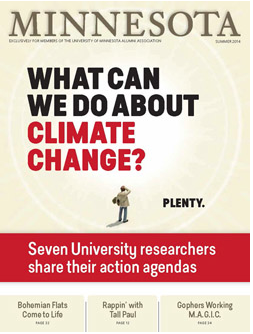
Although it made for unwanted advances (literally slithering down a couch towards me), Nikki was right. People are my greatest passion and they are at the root of everything I love. Finding what others are passionate about is by far the most interesting to me, Screen Shot 2014-07-23 at 6.06.39 PMwhich led me to be interviewing one of my favorite people, Rebecca Wilson, for Minnesota magazine.
A 2013 graduate of the U, Rebecca quickly found how to integrate various passions into her daily life. Majoring in advertising, with minors in theater and management, Rebecca leads a life that’s spread just as far across the board as her studies sound.

Many people are accustomed to working long or random hours; but not everyone is able to do both and love every moment of it.

Her days 9-5 are filled with cups of coffee, meetings and small talk with the coworkers. Thriving at Wellness Resources, Rebecca utilizes her journalism degree through internet marketing and social media. Regarding the more mainstream aspect of her life, Rebecca loves how “with advertising you need to get inside the consumer’s head…with all the data you form- it’s kind of like acting- you form this consumer character, you have all these attributes to them…it’s very cool to get into the mindset of a consumer.”

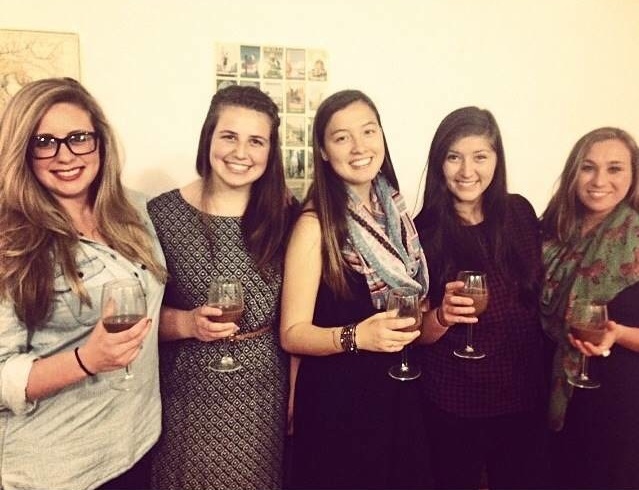
Meanwhile, her evenings and weekends tend to be spent on the stage. Acting allows her to get into the head of others as well. Previously, she’s been anIMG_2459 angsty teen, a damsel in distress and an heiress suspected of murder. This wide range of characters all resonated with Rebecca in one way or another, mirroring how well Rebecca connects with others everyday. She’s a people person, too.
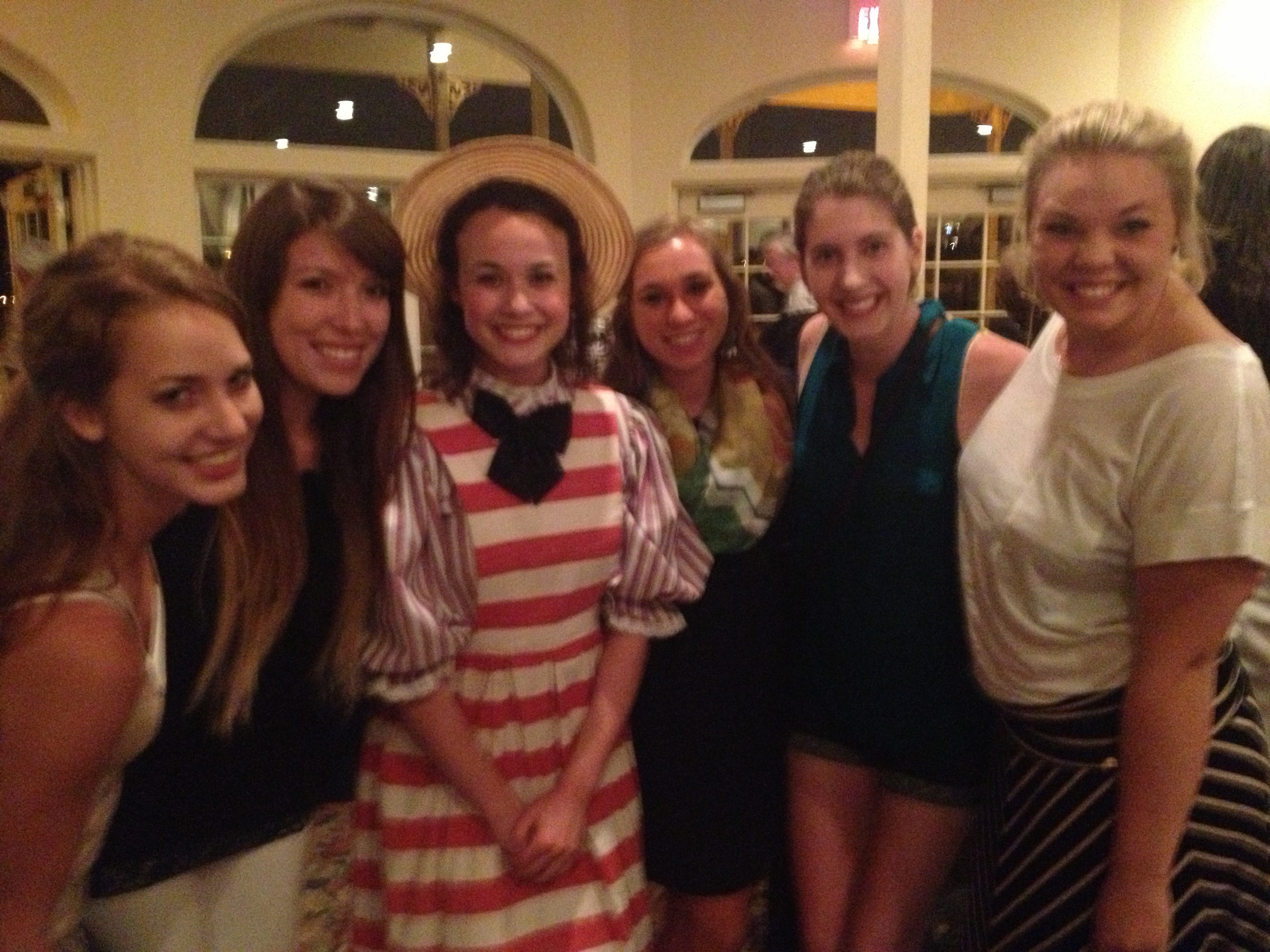
What U of M alum readers won’t know, is that I can verify this networker gene in Rebecca not from our interview, but from my personal experiences. This southern belle is my grandbig (again, sorority women, looking at you), my confidant and my mentor. Her ability to follow her instincts, take calculated risks, all the while having better manners than anyone I know, is what allows her to live so purposefully.

When asked if she had any advice for people looking for ways to pursue their passions outside of their primary work, she recommends, “Do something if you can that can be your source of income, so you can follow your passion without worrying about making rent, you can go on your whim more creatively, because you have that stable base. Seek the advice of people in that passion/career path you want, because they may have knowledge and advice you wouldn’t otherwise know. Follow your passions, but use your head.”

Spoken like a true networker.

Exhale- 5 Tips to Reduce Planning Stress

Pair a good book with a cup of tea, practice yoga in a meadow, and pencil in daily Swedish massages. While all of these things sound ideal, what if you could stop the cycle of stress before it starts?

For a planner, reality iScreen Shot 2014-12-27 at 3.37.17 PMs more along the lines of bottomless mugs of coffee, running between venues and Swedish fish. There’s good reason why- following only military personnel, military generals, firefighters and pilots- event coordinators hold the 5th most stressful job in the US, Forbes and CareerCast agree. It’s about time we brought a little more joy into our work and relied a little less on java.
Here’s how:

1. Write It Out

To-Do lists seem like a given, but rather making them only when tasks become overwhelming, these lists will be most effective if made on a short term and long term scale. Dividing lists into days, weeks and months is effective, but also divide them by department or topic. This allows you to recall the small details that seem relevant at one point, but will slip your mind by event day. Not a writer? Use the smartphone glued to your hand to keep track of the various lists you created, rather than trying to keep track of post-its.

2. Delegate Creatively

Meeting and event planners often feel pressured to have all the answers. This pressure will lead to a stressed leader and an underused team, which will show in your event. In the early stages of planning, set individual meetings with team members to find what areas of growth they would like to explore, then shift their responsibility to include a related project. Rethinking how responsibilities are divided can often lead to epiphanies of others’ skill sets and will win you back some free time. Use your resources of clients, partners, friends, friends of friends- expanding your horizons only expands the possibility of getting a “yes.”

3. Express Gratitude

Thank you notes after a big meeting or successful event are a no-brainer, but how often do we take the Screen Shot 2014-12-27 at 3.40.49 PMtime to thank the people that support us? To be most effective, it’s best to thank your team members quickly and frequently, and give more in depth feedback on a regular basis. After an event, your team also deserves hand written thank you notes (yes, your hand writing, not the intern’s) specific to their role. Reminding staff and volunteers of their value and impact will lead to a confident, motivated team that will take more projects off your hands.

4. Tried and True

We all love the new apps and cutting edge technology, but there’s something to be said for simplicity. If you’re not familiar with a platform or tool, take the time to learn it or have a staff member lead the efforts. Avoid the keeping-up-with-the-Jones’ mentality and have purpose and strategy behind what you include in a meeting or event. This reduces stress regarding how the new technology will function day-of, how it will be received and how to coordinate seamless back up plans. It’s essential to try new things and stay relevant, but only if executed with intention and patience.

5. Put Yourself First

We’re not counteracting tip # 3 here, but rather focusing on personal health. Tending to urgent event matters instead of quality nutrition and rest may cause completed projects to be better off unfinished. It’s simple: when you aren’t at your best, you won’t complete the best work. This goes for being a leader too; if you are tired and short-tempered, your team will be lethargic and negative as well. Take these tips and personalize them to your team and your events. If you’re stressed, you’re probably not the only one. By changing our behavior, we can change the culture of the organization. Maybe dedicate time to working out with your planning team, collectively unplugging for a period of time or a group activity that makes your job as fun as it sounds. In reality, no one will remember your perfect centerpieces, flawless transportation arrangements or impressive sponsors if the team has a mid-event meltdown.

Namaste, planners.

Make A Big Impression With A Mini Activity

When I think mini golf, childhood summer days are the first thing to come to mind. However, after visiting the Walker on the Green: Artist-Designed Mini Golf course, I’ve been shown that mini golf can transition into a new, adult-friendly option for the entertainment and décor of your next event. The Minneapolis Walker Art Museum invites you to relive summer vacation.Screen Shot 2014-12-27 at 3.46.54 PM

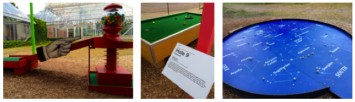
The creative and unique experience was designed by 29 artists, architects, collaborative teams and mini-golf mavens. Originally planned just for the summer, the Walker recently extended access to the green to September 28. Each hole of the 9 or 18-round course presented an innovative take on the design, making each putt a topic of conversation. My favorites included a gum-ball machine and a replication of constellations. Hole 9 was also one to remember, this life-size pool table required golfers to lift their clubs onto the table and putt or to shoot them like pool sticks.

Even better, if this experience leaves you wanting more, the Walker offers free gallery admission with each golf ticket. Guests can also visit the famous spoon and cherry sculpture, along with many others, in the adjacent nine-acre Minneapolis Sculpture Garden.

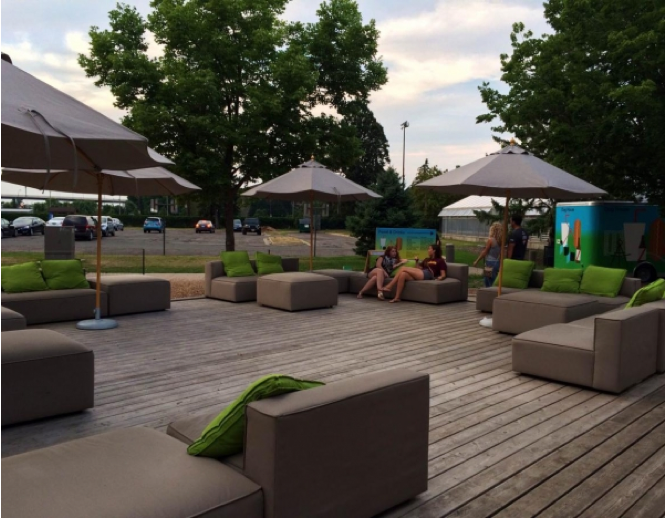
Perfect for events, the course offers arriving guests a chic deck complete with cozy couches to lounge on while socializing or awaiting other attendees. The deck’s tan décor with accents of lime green epitomizes summer, and creates space for an effortless pre-event cocktail hour. The course can be reserved for parties or special events of 50 guests or more.

TheScreen Shot 2014-12-27 at 3.47.12 PM venue gives guests a taste of the true Minneapolis- creative events, beautiful summer evenings and community engagement all come into play.

Neighboring Loring Park, between downtown Minneapolis and Uptown, this prime location promises great options for dinner and drinks before the event, and exciting night-life options after. Loring Kitchen is a personal favorite for happy hour or dinner, and is just outside Loring Park.

Summers in Minneapolis are what drive me, and every other resident, to stick out the cold come December (read: late October). Allow the summer celebrations to last past Labor Day by hosting your next event at this fantastic venue!

To reserve the Walker on the Green contact events@walkerart.org or call 612.253.3540


Southern Charm

After my first weekend trip to southern Italy during Easter weekend, I quickly realized I had the South all wrong. I associated it with the mafia, warmer weather, and cannolis, but any expectations stopped there.

In class, we discuss the southern small businesses that are forced to pay allowances to mafia members each month, just to insure the safety of their families and business.

The documentary Italy: Love It or Leave It showcased one Sicilian farmer who denied the mafia’s demands, suggesting there’s no progress in giving them what they want. As a result, the mafia burned his tractors and he was ostracized by his family and friends. It’s something few Americans are aware of; and no, watching The Godfather or Jersey Shore doesn’t count.

The beautiful Aeolian Islands

To our pleasant surprise, the Aeolian Islands welcomed us with warm weather Easter weekend, a post-hike picnic on a volcano, and a spontaneous Vespa cruise. We enjoyed cannolis courtesy of Alzo, the generous and chatty Sicilian fisherman, who only spoke Italian. He force fed us homemade cheese, poured us wine we didn’t request, and called his friend in Naples for me to talk to, also in Italian. So we got two out of three, but I’ll take wonderful people in lieu of the mafia any day.

This past weekend, my family ventured south to the small city of Positano on the Amalfi Coast. Just like Alzo, what stands out the most for me is the people. They had days spent on the beach, amazing local seafood and a sunset private boat cruise to compete with, yet somehow that southern charm trumps all.

At breakfast one morning in Positano, we met thee Teresa, of our Bed and Breakfast, Casa Teresa. Thrilled to find out I speak un puo Italian, she quickly jumped into stories of her family and expressed genuine interest in our travels. Sure enough her daughter and son-in-law live in Wisconsin, which prompted her to get her iPad (tech savviness I underestimated of Teresa) and show us pictures of her granddaughter’s first communion.

Positano
Positano

This semester, we realized the Italians have a forceful approach to hospitality, which rang true here too. It’s not a matter of if you want to sit down, have more coffee or take their recommendations; before long you find yourself at a table with the best view, on your fourth caffé, and eating a meal the waiter ordered for you.

It brings a charming, although confusing, sense of security. Somehow in Italy, you’re always at home.

Once our time in Positano came to an end, we moved north to Naples to train further north to Cinque Terre. After rude encounters at dinner, a canceled train, and conniving taxi drivers, you could say Naples wasn’t the best experience. The details of this story could be a blog post of its own, but I think that’s the issue with vacations, or maybe humans in general. We allow one bad experience, one story of misfortune to overshadow all the beauty, adventure and laughter of our other experiences we are fortunate enough to have.

My biggest fear is coming to someone’s mind and having their last memory of me being a negative one. Similarly, I fear when my family returns to the US, the first story they will tell is that of their disastrous time in Naples- despite the historical tours of Rome, the stunning scenery of Positano and the delightfully tiring hikes in Cinque Terre.

Things can’t always go as we expect, and if they did I’m not sure we would appreciate the reliability life offered. However, recognizing and valuing the wonderful aspects of any day, vacation or life in general, takes the edge off surprises. In my case, the greatest photo-ops tend to not work out- but to be in Italy with my family, have gelato two blocks away and getting to laugh together over all my awkward photos, is something that makes this day, vacation and life, one I wouldn’t change for the world.

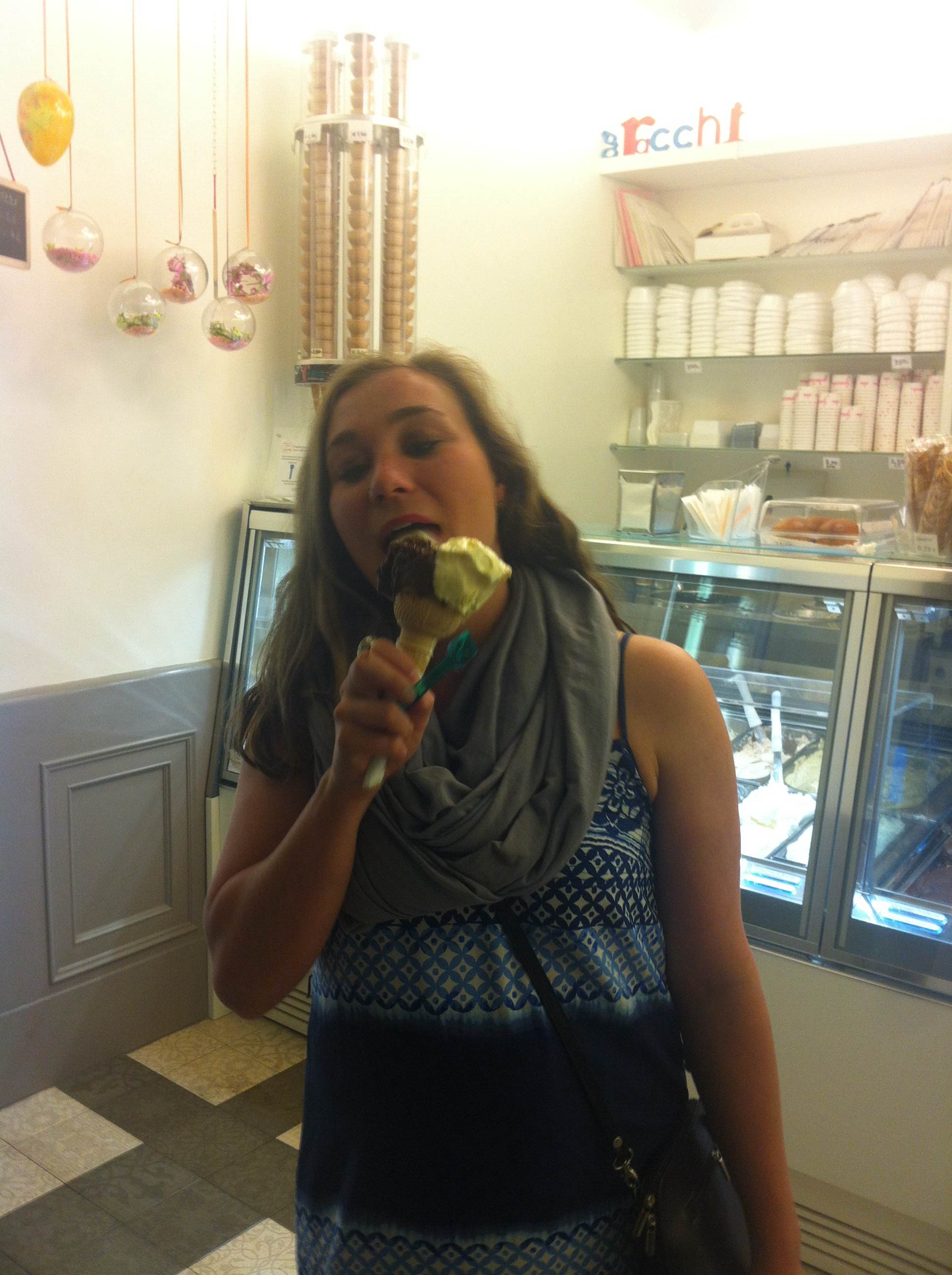
My gelato action shot...
My attempt at a gelato action shot…

Finisco Finals

One of the least popular things you can say, as a college student in May, is “I’m done!”

I apologize in advance. With some finals scattered through the end of April, presentations instead of exams and a movie viewing, you could say this was one of my more enjoyable exam seasons.

Instead, I tested my emotional stability as I had many “lasts” with my wonderful abroad group of friends and prepared to say goodbye to my favorite city. I brainstormed which stories I’ll tell first, and recalled historical facts while showing my family the city. Exams are meant to see what you’ve learned throughout the semester; since Italy skipped most of those, here’s what I’m walking away with-

1. There’s always more to see: In my neighborhood, in Rome, in Italy, in Europe, in the world, this rings true. You won’t ever be able to visit or do all of it, but what would be the appeal if you could? Traveling should be a life long hobby and value, not something you do for one semester in college. There’s always something to go back for, and wherever you are, there’s always something to be discovered.

2. “Bar” refers to coffee: Classic mixup. However, my discovered love for cappuccinos made the abundance of “bars” exciting in it’s own way.

family trevi3. I’m no stranger to being wrong: I originally thought I shouldn’t go to Rome since I had been there (for two days). That was funny. I couldn’t be more pleased with my last minute decision to study abroad, or coming back to Italy. Although it wasn’t the first time I threw a coin in the Trevi, walked through the colosseum, or tasted gelato; I’m no longer the soon to be senior in high school who did all those things. I’ve retained more knowledge, appreciated more beauty and laughed with purer happiness than I could have ever imagined, especially in two days.

4. Or to being right: Noticing that I can correctly remember directions, silently say the correct answer or accurately predict friendship potential; I found how to trust my instincts and myself. Welcoming independence and confidence, this semester has continued the process of coming into my own, one I had forgot should always be in progress. Experiences like being the most trusted translator at my internship, learning the Italian language, and showing my family around this wonderful city have only magnified this.

5. Blame it on the a-a-a-alcohol: Even giving up sweets for lent can’t save you from the calories of red wine. Who knew? But  at 3 euro a bottle, I don’t think anyone is surprised.

6. How to dive deep: Whether it’s taking the time to learn about what I am seeing rather than just snapping a picture, or taking the time to correct first impressions, this semester taught me to look beneath the surface. This applies to people as well, baccina famas many of my favorite memories took place with my roommates, that started as strangers and became family.

7I’m such a mom: That wasn’t just a cliche comparison, our apartment’s family dynamics consisted of a grandma, aunt,
mom (yours truly), angsty teen and baby. From approving outfits as we left for class to internship searching for everyone, my mother goose nickname surfaced once again. Although it’s not surprising, this strong characteristic allowed me to see that regardless of the city I’m in, the friends I make or the routines I fall into, my personality will always be distinctly me.

8. Ti amo, Roma: More than anything, all of these things have made me realize that Rome will always be home. This city went from being the short term back drop of my first trip to Europe as a 17 year old to the city that celebrated my 21st birthday with me, showed me the value of history, and gave me a greater appreciation for perspectives different than my own. Although I could skip minor details like political corruption and a lack of feminism, I will always adore Rome and Italy as a whole.

Although my time is nearing an undeniable end, my experiences, appreciation for cultures and languages, along with my adoration for traveling, have made Rome a part of who I am. This semester has taught me more than any stack of notecards, bubble sheet or strict professor ever could. For this reason, I am unable to be a college student boasting that “I’m done!” because this semester, this growth, will always be with me.

One Minute, One Million Memories

“91 cappuccinos. Wine corks that probably shouldn’t be counted. 9 weekends spent traveling. 3 private cooking classes. Stories of the 5 senses and 266 popes, all started 14 weeks ago from today,” I tell two cameras larger than my body and the two monotone men controlling them.

IMG_1255In my Pope, Politics and Popular Culture course, we were offered the unique chance to broadcast our opinions on Vatican TV. Well, more or less.

Standing in the Vatican TV studio, our class was asked, one by one, to describe our abroad experience in 60 seconds. Our professor Sèan, recommended we think about the balance of what we would say- be prepared, yet not robotic; composed, yet genuine.

The cherry on top of this challenge was when Sean asked us to share of what our audience needed to know, not just what we would like to say.

60 seconds. It’s said to be how long it takes first impressions and judgements to form, and is often the maximum amount of time we have to answer a question. While this seems superficial, it makes sense. In my opinion, it’s partly a result of our tendency to like the ideas of things more than the logistics. “We’ll get coffee!” can go on for months before you actually find yourself sipping espresso in company.

So as much as everyone “can’t wait to hear everything” there’s still a strong chance those stories will need to come in 60 second increments. Luckily, the more I thought about this semester summary, I realized the best experiences don’t have to be told. Gained independence carries itself in my aura, global perspectives are intertwined in intelligent conversations and my favorite stories would make me laugh too hard to effectively communicate.

Sometimes it’s not the pictures you have to show, or the things that can be said.

I also found this through my communications course as I sat behind a Vatican Radio microphone, during another amazingIMG_2412 class. While in the studio at the Vatican, Sèan asked questions about our résumés, testing how well we were able to communicate our experiences and sell ourselves.

Elements of any résumé can only tell you so much, that’s the purpose of an interview. In my case, being a yoga instructor intrigued Sèan, and he wanted to know more. I described my passion for helping others, how I am able to represent myself as a brand and how my time on the mat leads to serene problem solving. I was prepared but not robotic, but more importantly I was able to communicate something you wouldn’t find from that one piece of paper.

For my 60 seconds of fame, the anticipation and monologue setting made me a bit more unsettled, and I’m not sure I was as real as the previous Vatican media experience. I have yet to see my Vatican TV video, but  regardless of how it turns out, the experience was enough to make up for any embarrassing stutters or awkward body language.

Following the switching red lights of the cameras, I said something along the lines of, “I’ve never done so much in a semester, and had it go so quickly. But really I think it’s because I haven’t truly tried, I don’t think anyone has. Being abroad offers you all these amazing experiences, but they have an expiration date.We’ve seen and done more than so many locals, because for them it’s not going anywhere.”

“Making the most of everyday,” I continued, “is something that can only start once excuses stop, which has made this semester as amazing as it was. It’s also universal, wherever you are, wherever you’re living or studying, explore the world around you. It’s because of this mindset that I can’t recap my study abroad experience in 60 seconds, or reduce it to a number. And for that I am eternally grateful.”

Now that you have the semester in 60 seconds, you have a few weeks to prepare the specific questions. But only if you want truly genuine answers, can handle moments of cackle-induced incoherency, and are able to set a date to add to that infamous wine cork collection.

Time Is Of The Essence

As I’ve mentioned, Italy takes a different approach to daily routines, one that has made me never feel pressed for time- until now. I’ve been told that our time abroad is beginning to near the end, an idea I refuse to acknowledge enough to fact check.

The saddest part of this concept, isn’t all the cappuccinos, amazing professors or beautiful monuments that I will miss. It’s the presence of people, across many different programs, counting down the days until their return to US soil.

Yes, everyone is different and to each their own, etc. Yet, for me, witnessing these reactions to our last month studying abroad represents a lack of gratitude and appreciation. From Rome to Brazil to Australia, wherever you are, studying abroad is a privilege so many people are unable to experience. How could you not appreciate, cherish, and already miss every single moment?

Screen Shot 2014-04-10 at 9.51.49 AMThis value of time coincides with the Italian approach to food. Dedicated to the slow food movement, Italy has reinforced my values of eating local and knowing what you’re eating. From the traditional family restaurants to the abundance of open air markets to the beloved Made In Italy label, real food is essential to Italy.

Similar to students ready to return home, our usual approach to food speeds along a process in a way that compromises quality and experience. Our Sustainable Foods professor, Sergio, says we are “enslaved by speed,” meaning we allow a lack of time to decide everything about our lives, especially what we eat. After an amazing weekend field trip to the Abruzzo region of Italy, where we only ate food grown and produced on the farm and watched cheese being made, the value of taking your time with food was driven home.

Everywhere around the world, especially the US, we take quality ingredients for granted and attempt to make the process of cooking and eating as efficient as possible. Few people want to know where their meat or produce come from, and have even less interest in the process it took for their meal to get there.

Started in Italy by Carlo Petrini and a group of activists in the 1980’s, Slow Food began in response to the opening of the first McDonald’s in Rome. Even though there are now 10 Roman locations, this is no sign of a Slow Food defeat.

Followed first by Germany and Switzerland, the Slow Food movement gained international recognition, even leading to Slow Food USA in 2000.

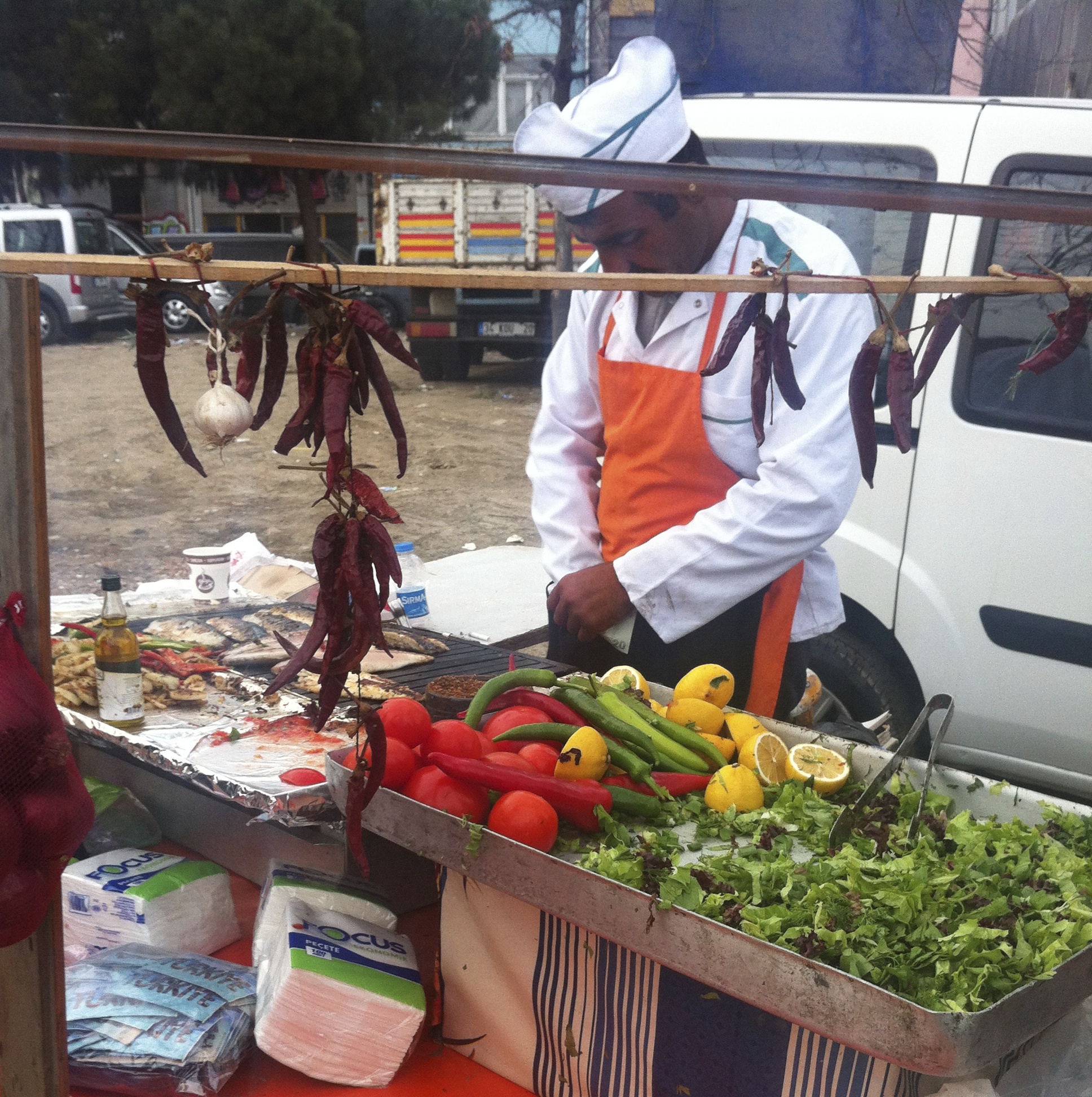
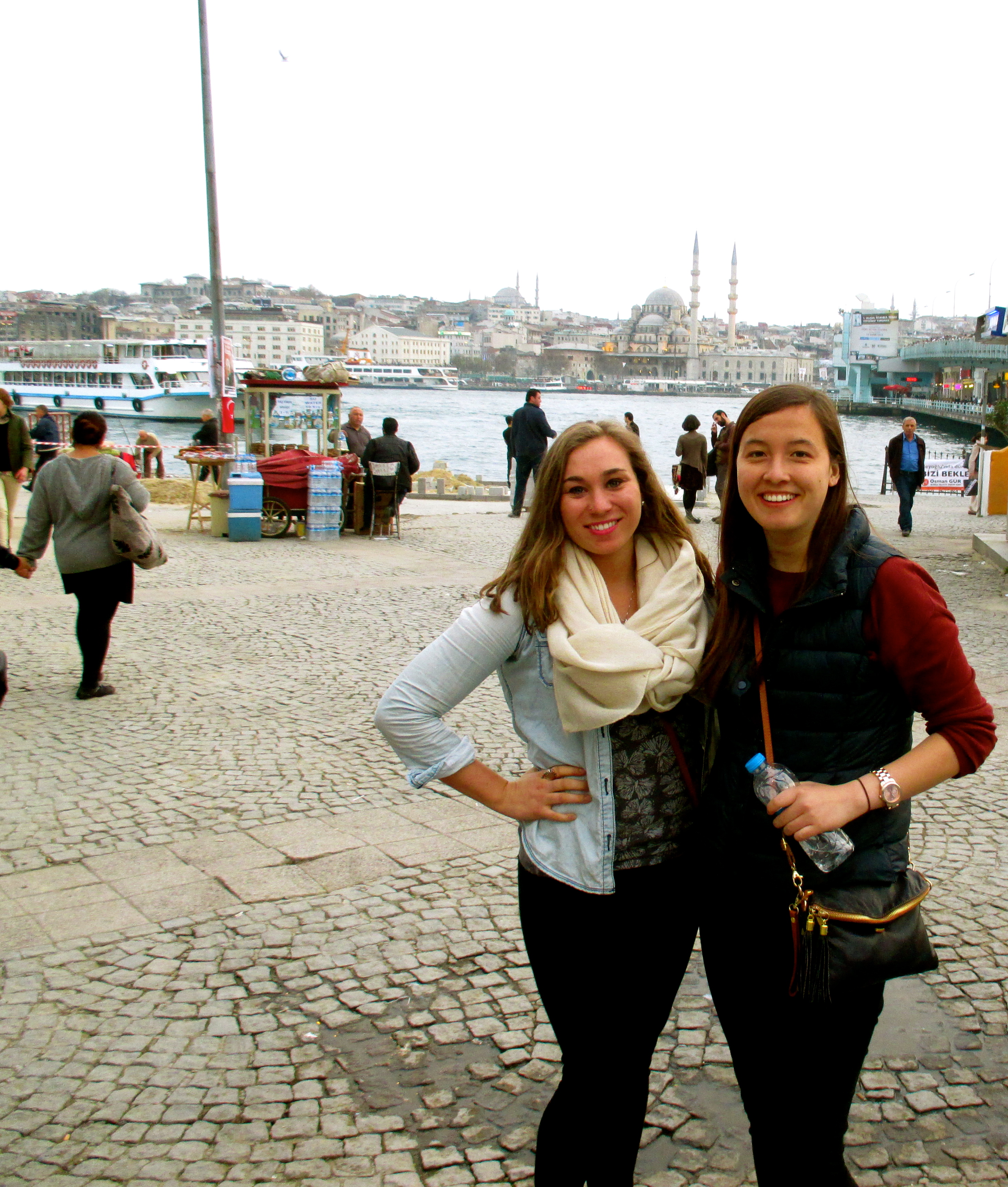
IMG_1782Eating is one of the simplest, yet most memorable, ways of experiencing a culture. This makes quality food universally and cross-culturally valued, something I experienced first hand in Istanbul. Walking past the fishermen waiting patiently by the river, walking through bustling fish markets, then visiting the famous fish sandwich vendors and enjoying our meal on said river; the simplicity was impossible to ignore. Sergio often reminds us to ask ourselves where our food comes from. All at once I could see where my fish came from, and each step of the production process, usually kept clandestine by the food industry. This transparent, local and sustainable approach to food is one of my most sacred memories of Istanbul.

What this all comes down to, is there will never be enough time; but we have more control over how we spend it than we admit. Whether it’s a semester abroad or ingredients for dinner, we’ll experience so much more if we make the most of what we are given. Skype shouldn’t trump scenic walks through foreign streets; 15 minutes isn’t better spent Facebook stalking than cooking real meals; and opportunities for connecting and building relationships with those around you shouldn’t be swapped for updating that silly countdown.

True appreciation of the experiences we are given, whatever they may be, calls for a mindset that focuses on what you have accomplished, enjoyed and grown from- not when it will be over.

And if you’re truly doing it right, what you take away from these once in a lifetime opportunities won’t have an expiration date. You’ll meet people with an open mind, thinking of that one roommate that pleasantly surprised you; you’ll say yes to invitations out of your comfort zone, remembering everything you gained from new cultural experiences; and most importantly, you’ll have gratitude that needs not a reminder.

Travel Sin El Ego

7o degree weather usually acts as a cue for the warmest clothing and least amount of cares. In Rome, however, you find locals in slightly lighter winter coats, patiently awaiting the scorching summers. Pairing my skirt with a sweater and tights, I continued my efforts to be mistaken as a Roman.

Whether it’s the way we dress, the news we read or the explanations we BS, it’s common to love being in the know. This makes it difficult to release our egos, and unashamedly say I don’t know.

This translates to travel as well, and not just with most people’s reluctance to ask for directions.

While traveling to Istanbul, Emily and I realized we knew next to nothing about the country we had worked so hard to enter. Luckily, we had a wonderful host awaiting us, who was able to bring us to the best hole-in-the-wall’s and explore the world’s second largest city with directional confidence. Or at least feeling no responsibility for the lack thereof.

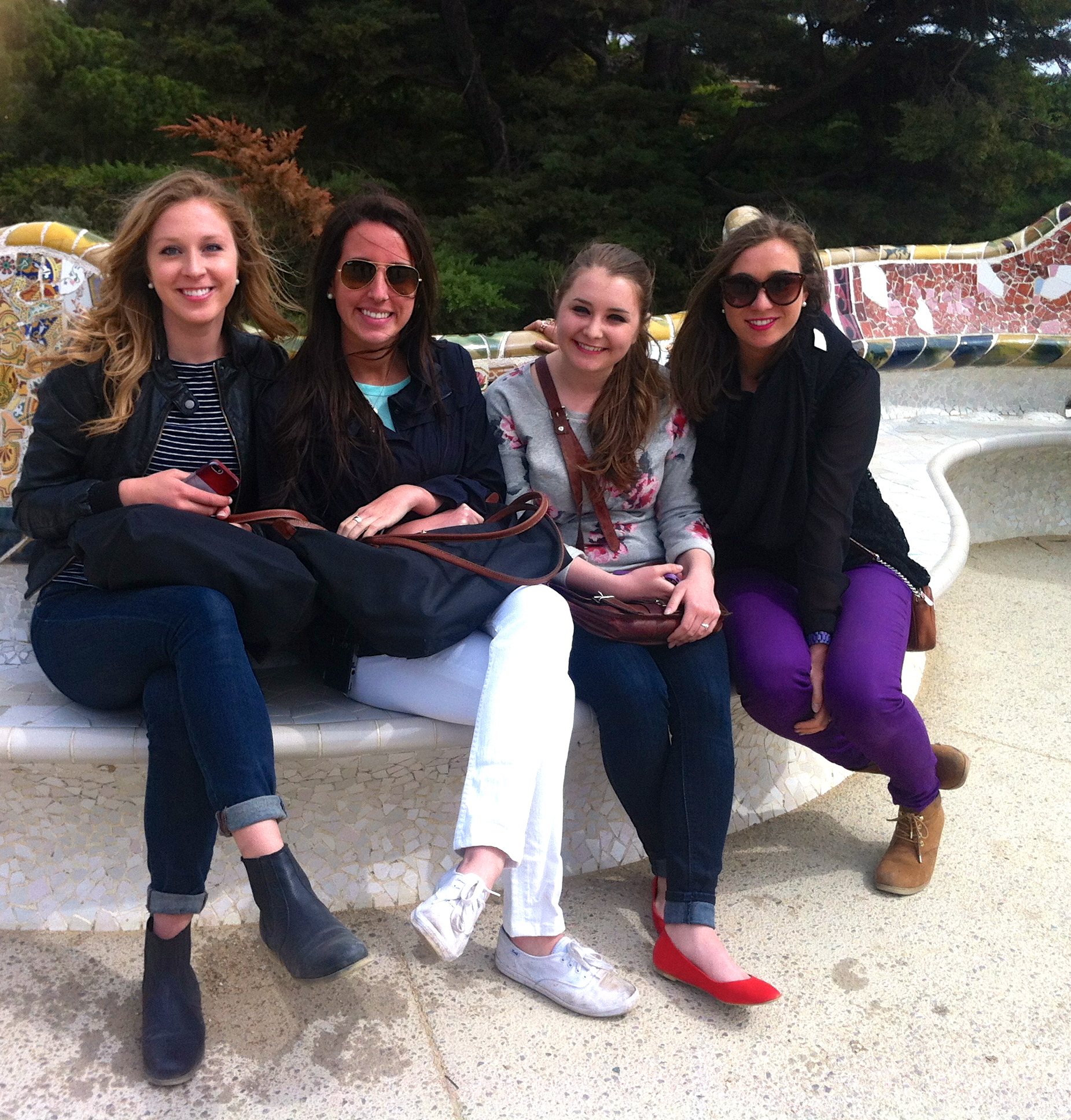
Park Güell Circa January 2013

This past weekend, I visited Barcelona with friends, a trip that came with a very different mindset than Istanbul. Having travelled to Barcelona with my family the year before, I attempted to resist thinking that I had seen it all. Once again, a temporary local pulled through. A friend of a friend, who studies there, showed us all a Barcelona worth revisiting.

Touring and dining in neighborhoods I hadn’t realized existed made me quickly realize I had not seen it all. Traveling on foot rather than opting for taxis, creating a multitude of ridiculous stories, and comparing paella prices also showcased the differences of traveling with friends versus family.

I realized this was a wonderful opportunity to see Barcelona a way most won’t. Saving time not revisiting some monuments, I decided to break away from the group to take a bike tour around the city and refused to let the Picasso museum go unseen. And I’m glad I did.

Seeing the city via bicycle turned out to be a completely different experience. Even though most of the monuments weren’t new to me, many of the historical explanations were. Last year, I recall being told Casa Batllo is meant to look like a fish, while this year, I learned there’s a tale of St. George who fought off an indestructible dragon to save the city’s princess that inspired the building. The sculpture described as the face of Barcelona was actually done by the American pop artist Roy Lichtenstein in 1992, when earlier in the day I said I vaguely remembered Picasso being the artist. Wrong for so many reasons.

IMG_1999
Park Güell Round 2

It’s a beautiful process- learning to let go of one’s ego and admit how much more you have to learn. These opportunities are all around us, not just granted with one’s passport. We need to not only realize how many lessons we have to learn, but also realize how many teachers surround us. Whether it’s our peers, strangers, or our parents (usually the most difficult), we must recognize that everyone has an individual perspective, and something to share.

As I walk back from class, starting to glisten from my winter-ready outfit, I realized sometimes it pays to not fit in. I pass tourists wandering away from the ruins in search of more monuments, only to find themselves on Via Baccina, the street I call home. They turn around discouraged, thinking there’s nothing more to be explored or discovered.

Little do they know, there’s a popular neighborhood filled with restaurants, cafes and boutiques right at their footsteps. More so, there are Monti residents walking back from the grocery store to their posh apartments, who know the in’s and out’s of the city. One apartment to speak of is even filled with five girls studying abroad, who would love nothing more than to be asked can you tell me what’s over here? However, that’s a question only answered when we simply aren’t afraid to ask.

But We’re In Pompeii?

One of my favorite aspects of studying in Europe, is having the opportunity to visit other countries and get a taste of each unique culture. That’s why my roommate, Emily, and I couldn’t wait for our upcoming trip to Istanbul to visit friends.

IMG_0784After busing three hours south, we started the weekend off right with a school field trip to Pompeii. Friday morning was spent touring around the amazing ruins, visiting the world’s oldest amphitheatre and envisioning the village that once was. Just as we were heading to our delicious lunch, our Director mentioned that we would return to Rome by 6 or 630 p.m.

I’ve never had heart problems, but I think it’s safe to say after receiving this news, I can relate. A misinformed staff member had told me we would return to Rome by 3 or 4, which is why Emily and I joyfully booked our flight to Istanbul for 7 pm. So young and naïve.

Explaining the issue to our director, Frances, she informed us there was no way we could return to Rome on the three hour bus ride. After many calls to the train station, she figured out a series of trains for us to take that could get us to the Rome airport by 5:30 if everything went perfectly. Here’s how that played out-

1. The Pompeii-Napoli train: With our train in less than 10 minutes, there was no better time to realize two girls were missing from the group. As the bus cruised around looking for these Dora the Explorers, the time of our train came and went, and so did our sanity. In response to our hysterical laughs and despair, Frances confirmed that we needed to be in Naples by 4 pm. “But we’re in Pompeii?” Emily responded. Good point Em. Cue 20 minute delay leaving Pompeii.

2. Napoli-Roma train:  Delayed 15 minutes, so life was getting exciting. Eventually, we spent the train ride laughing about nothing and everything, and our stressed spirits were lifted as we reminded ourselves that we would make this flight.

3. Termini in Rome- Airport train: Even though we ran from the train to the ticket office, we missed it by 90 seconds. Seeing as these run every half hour and any buses or taxis would be victims to rush hour traffic, we had nothing to do but wait. Boarding our final train, we arrived at the airport at 6:20 pm and took off in a sprint. Just to remind you, flight time was 7:05, people.

4. Check-in at Fiumicino: Literally sprinting through the airport (me, in wedges of course) we discovered check-in closes an hour before flight time. With no way to check-in, the only way Turkish Airlines offers boarding passes, we took off for the gate.

5. Security: Ain’t nobody got time for that line, so we convinced a nice lady to let us through the first class security. Relying on our passports, looks of desperation and a screenshot of my reservation, we both got through.

6. The Gate: Continuing on our amazing race, we found ourselves at Gate B only to find the screen misprinted where we needed to go. An Italian employee, who was very over our disheveled appearances and panting pleas for assistance, guided us in the right direction.

7. The Last Call: Ignored it and kept sprinting. Determined not to give up, we continued on through flights of stairs, weaving through large groups, and acquiring endless stares of confusion. For the record, I know more words for running than “sprint” but to use any of these options would discredit just how much effort went into this.

8. Customs: Apparently, this is required for leaving the EU. Once again, the mile long line didn’t fit our tight schedule so we asked an employee to help us out. He said he would, but we could tell he lacked the girth and personal interest to move these mountains. Ditching him, we went up to the front of the line and explained the situation, requesting to skip. These lovely men didn’t speak English, but they cheered us on and told the people in front of them to let us through. What gems.

9. Tram: If Gate G weren’t a tram ride away that would be too easy, so dripping in sweat and desperation we hopped on. This provided a fun opportunity to explain in Italian to some confused passengers what a joke my life was. After sprinting some more, we finally found G5.

10. Boarding Passes: We knew this would be an issue at some point, but we gave the Turkish Airlines staff our passports and asked what they could do. Thankfully, a kind woman, who wanted nothing to do with my silly screenshot, printed our boarding passes and sent us on our way. Asking for just a bit more from our legs, we ran to the plane, and for good reason, because the door shut right after we stepped on.

Sitting down in the most well deserved seats of our lives we quickly fell back into hysterical laughs of disbelief. Although it seemed impossible, we dedicated ourselves to challenging any obstacle, sprinting every terminal, and counteringIMG_0830 any ominous outlooks with positivity.

We were also motivated by the thought of telling our friends that we couldn’t make it for the weekend. Imagining that hypothetical conversation, from Rome, made it essential for us to not take “no” for an answer.

We often forget the power of making time for people, and even more so, making time to see them. This is one of the simplest ways of showing the people in our lives the value they have, yet it’s often utilized the least. It’s so easy to fall into the habit of telling someone you’ll “grab coffee,” but never going out of your way to set a date. However, based on the amazing, unique and hilarious weekend Emily and I had in Istanbul, I can tell you there’s nothing that is more worthwhile- regardless of what it takes to get there.

Out of breath, this time from laughing, I asked Emily, “how are we going to make people understand this story?” To which she replied, “We need to make them run.”